Quick Answer: A white backsplash is one of the most versatile choices for a kitchen or bathroom, bright, easy to pair with any cabinet or counter color, and rarely feels dated. The trade-off is grout maintenance and a slightly higher chance of showing daily grease and water spots near the stove or sink. Choosing the right finish, grout tone, and tile format solves most of these concerns before they start. Read on for the full pros and cons, cost breakdown, and design details that make a white backsplash look intentional.
In This Guide
- What Is a White Tile Backsplash?
- White Kitchen Backsplash: Does It Still Work?
- Pros of a White Backsplash Tile
- Cons to Consider Before Installing
- White Backsplash With White Grout: Worth It?
- Cost Breakdown
- White Subway Tile and Other Styles
- Pairing With Counters and Cabinets
- Installation Tips and Best Practices
- FAQs
If you are updating a kitchen or bathroom, a white backsplash is one of those choices that feels safe in the best way. It can look clean and bright, work with almost any cabinet color, and still feel stylish years later. But it is not perfect for everyone, and the details, tile finish, grout color, layout, and maintenance, matter more than most people expect.
This guide gives you a clear, real world look at what a white backsplash tile does well, where it can frustrate you, what it typically costs, and how to choose a style that looks intentional rather than basic.
What Is a White Tile Backsplash?
A backsplash is the protective surface on the wall behind areas that get splashed and splattered, behind your kitchen sink, stove, or bathroom vanity. Tile is a popular backsplash material because it handles moisture well and wipes clean easily.
A white tile backsplash simply means the tile itself is white or white leaning: ivory, warm white, off white. The look can be classic, modern, soft, bold, textured, or glossy. White is more flexible than people give it credit for.
- Ceramic: often budget friendly, widely available, and great for walls
- Porcelain: dense and durable, with many finishes and shapes
- Glass: reflective and bright, often used for a sleek or modern style
- Natural stone (white marble, limestone): beautiful, but needs more care
- Subway tile: a shape and style category, usually ceramic or porcelain, and a timeless go-to
Even within white, you will find cool whites, crisper and sometimes slightly blue gray, and warm whites, creamier and softer. Matching that undertone to your counters, cabinets, and lighting is one of the easiest ways to make the space feel cohesive.
White Kitchen Backsplash: Does It Still Work in 2026?
Yes, and it remains one of the most requested backsplash styles for a simple reason: it does not lock you into a single design era. A white kitchen backsplash installed today still works if you repaint cabinets, swap hardware, or update countertops years down the line. Where white subway tile once felt like the default, current kitchens are pairing white backsplash tile with warmer wood tones, textured tile finishes, and colored grout to keep the look from feeling generic.
The kitchens where a white backsplash performs best tend to share a few traits: darker or more richly toned cabinetry that benefits from a bright contrast, natural light that a glossy or satin white finish can amplify, and countertops with strong veining or pattern that a simple white backsplash lets take center stage instead of competing with it.
Pros of a White Backsplash Tile
Timeless and Versatile
White tile does not lock you into one trend. Pair it with warm wood cabinets today, paint your cabinets deep green next year, and the backsplash still works.
Makes Small Spaces Feel Larger
White reflects light, helping a compact kitchen or small bathroom feel more open. A glossy white tile bounces light around rooms with limited natural light.
Easy to Pair With Other Materials
A white backsplash softens a bold countertop pattern, balances warm wood tones, and complements stainless steel appliances without competing for attention.
Lots of Styles and Price Points
Glossy subway for a classic finish, matte for a modern feel, zellige-style for character, textured tile for depth, or mosaic for detail in a smaller area.
Cons to Consider Before Installing
It Can Show Dirt and Stains More Easily
White tile itself is usually easy to clean, but it can make everyday mess more obvious, especially near the stove. Grease splatter, sauce spots, and coffee drips stand out if they sit too long. Most of this wipes off quickly, but you might notice it more than you would on a darker or busier backsplash.
Grout Maintenance Is the Real Issue
For most people, grout is where frustration starts. Light grout can discolor over time, especially in high-use cooking zones. Dark grout hides stains better but creates stronger contrast, which some people love and others find too busy. Reduce grout stress with larger format tile (fewer grout lines), stain-resistant grout where possible, a medium grout tone to hide wear without harsh contrast, and proper sealing when recommended for your grout type.
All-White Can Feel Flat in Some Homes
With white cabinets and light counters, white-on-white can look plain if there is no texture or contrast. For warmth and depth, consider white tile with variation, subtle ripples, handmade edges, gentle shading, or pair it with a grout color that adds definition.
Installation Details Matter More Than You Think
White tile does not hide layout mistakes. Uneven cuts, sloppy grout lines, or a crooked first row all stand out. It is not that white tile is harder to install, but it does reward careful planning and clean work.
White Backsplash With White Grout: Is It Worth It?
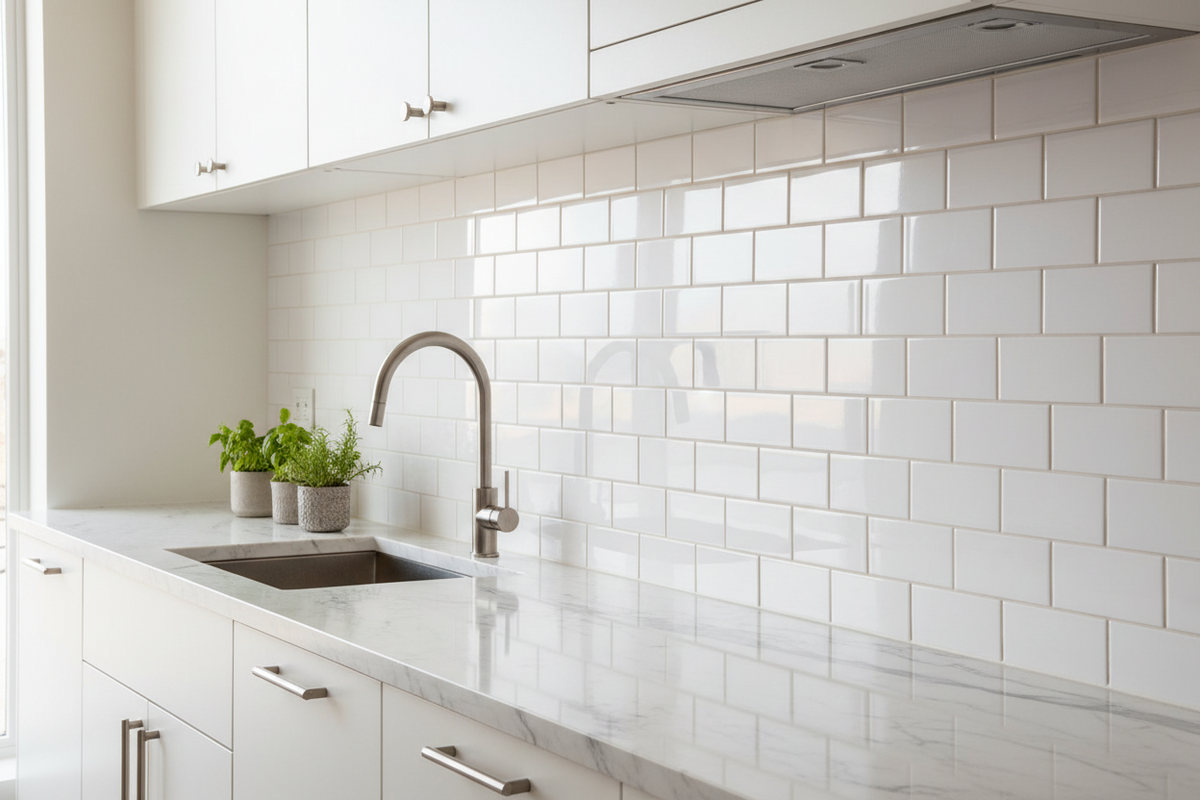
A white backsplash with white or near-white grout is the most seamless look available, the grout lines nearly disappear and the wall reads as one continuous, calm surface. It suits minimalist and modern kitchens especially well, and it is the best choice when you want the tile shape or texture, rather than the grid pattern, to be the visual interest.
The trade-off is upkeep. White grout shows grease, food splatter, and daily grime faster than a mid-tone grout, particularly directly behind a stove. If you choose this combination, plan for a stain-resistant or epoxy-based grout, seal it properly, and budget for more frequent spot cleaning in the cooking zone specifically. Many homeowners land on a middle ground: white grout everywhere except directly behind the range, where a slightly deeper tone hides daily cooking mess without breaking the overall clean look.
Cost Breakdown: What to Expect
Backsplash costs vary based on tile material, tile size, layout complexity, and whether you hire a professional. A simple subway layout is usually less expensive than a mosaic or a specialty pattern with lots of cuts.
| Tile Type | Typical Price Range | What to Know |
|---|---|---|
| Ceramic | Budget to mid-range | Great for walls, lots of styles |
| Porcelain | Mid-range to premium | Durable, wide design variety |
| Glass | Mid-range to premium | Bright, reflective, shows smudges more |
| Natural stone | Premium | Beautiful, but more upkeep |
| Mosaic / specialty | Mid-range to premium | More labor, more cuts, higher install cost |
Installation labor can cost as much as, or more than, the tile itself, especially with a complex layout. Labor tends to increase when the tile is small or mosaic format, there are many outlets or tricky corner cuts, you choose a herringbone or chevron pattern, or old backsplash removal requires wall repair first.
Other materials to budget for:
- Thinset or adhesive
- Grout and caulk
- Sealer, if your grout or tile requires it
- Edge trim pieces or finishing profiles
- Outlet extenders and cover plates, often needed once tile thickness is added
White Subway Tile and Other Backsplash Styles
White subway tile is popular for a reason: it is clean, timeless, and easy to style. To keep it feeling updated rather than default, focus on the details, a classic brick layout, stacked, or vertical stack, a longer tile format for a more modern look, and a glossy finish for brightness or matte for softness.
If you love white but worry it will look flat, texture is the answer. Ribbed, wavy, or handmade-look tile adds dimension without adding visual noise, and looks especially good under under-cabinet lighting, where shadows bring out surface detail. For a smaller, more detailed area, a white mosaic pattern behind the range or in a small powder room adds interest without covering the whole wall in a bold statement.
Pairing White Tile With Countertops and Cabinets
- White cabinets and white counters: choose textured tile or contrasting grout for depth, otherwise the space can read as flat
- Wood cabinets: white tile brightens the space and balances the warmth of the wood
- Dark cabinets: a white backsplash adds crisp, clean contrast
- Veined stone counters: keep the tile simple so the countertop pattern can be the star
Design tip: bring one tile sample home and look at it in your actual lighting. White changes noticeably between morning sun, warm evening bulbs, and cool LED lighting.
Installation Tips and Best Practices
Prep the wall properly. A smooth, clean, dry wall free of grease or peeling paint makes tile look better and last longer. If removing an old backsplash, plan for patching and sanding first.
Plan your layout before you stick anything. Dry-lay a row or map it out to avoid awkward slivers at the end. Centering the layout on a focal point, like the stove or sink, usually looks more balanced than starting from a corner.
Choose grout with real life in mind. If you cook often, a slightly darker grout is less stressful day to day. If you want a seamless look, pick a grout close to the tile tone and be prepared to keep it clean.
DIY or hire a pro? A straightforward subway layout can be DIY-friendly with careful measuring and clean work. Consider a professional for complex patterns, mosaics, or uneven walls. If hiring, ask to see photos of past backsplash work, alignment and grout consistency tell you everything you need to know.
Frequently Asked Questions
Are white tile backsplashes easy to clean?
In most cases, yes. A gentle cleaner and a soft cloth handle everyday cleaning well. The bigger factor is grout, choosing a grout color and type that fits your cooking habits makes cleaning feel effortless instead of constant.
What grout color looks best with a white backsplash?
It depends on the look you want. White grout gives a clean, blended appearance. Light gray is a popular middle ground, adding soft definition while hiding minor stains better. Dark grout creates a bold pattern, but every line stands out, so alignment matters more.
Is white backsplash with white grout hard to maintain?
It takes more upkeep than a mid-tone grout, particularly behind a stove where grease and food splatter show up faster. A stain-resistant or epoxy-based grout, properly sealed, keeps the seamless look with less day-to-day frustration.
Does a white kitchen backsplash work with wood cabinets?
Yes. White tile is one of the easiest ways to balance warm wood tones, keeping the room from feeling too dark while giving you flexibility with countertops and hardware finishes.
Can I install a white tile backsplash myself?
Many homeowners DIY a backsplash successfully, especially with larger tiles in a simple layout. The keys are careful wall prep, accurate measuring, a level starting line, and patience. Mosaics or complex patterns are usually better left to a professional.
A white tile backsplash can be one of the smartest choices you make in a kitchen or bathroom, bright, versatile, and easy to build a style around. The trade-off is thinking through grout, cleaning habits, and installation quality upfront. Choose the right tile for your lifestyle, not just the prettiest photo online, and white becomes a long-term win rather than a constant maintenance project.