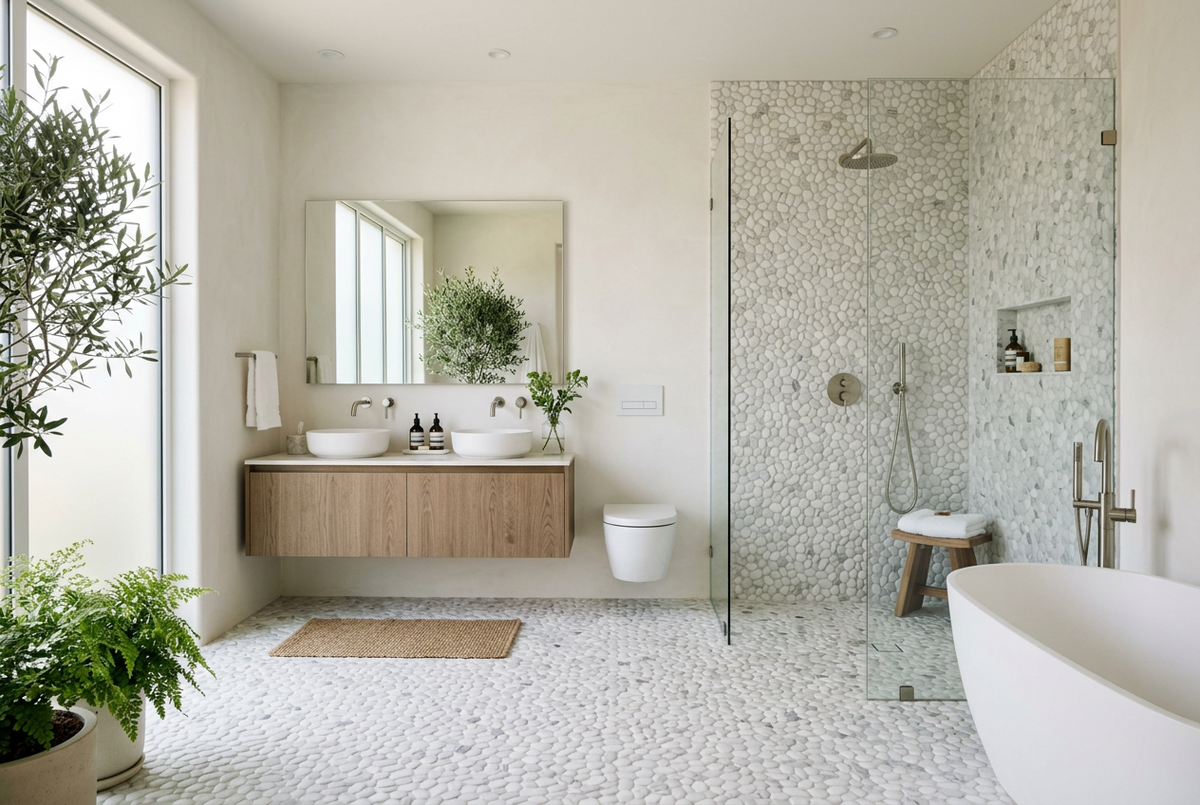
White tile is easy to love and hard to get right. Too flat and the room feels clinical. Too glossy and the floor gets slippery. White marble pebble tile solves both problems at once.
In one sentence
Bianco Dolomite pebble tile is a white natural stone with soft gray veining, sold in three pebble sizes (small, medium, and XL jumbo) plus a Moon Mosaic, and the right size depends mostly on whether the surface is a wet floor or a wall.
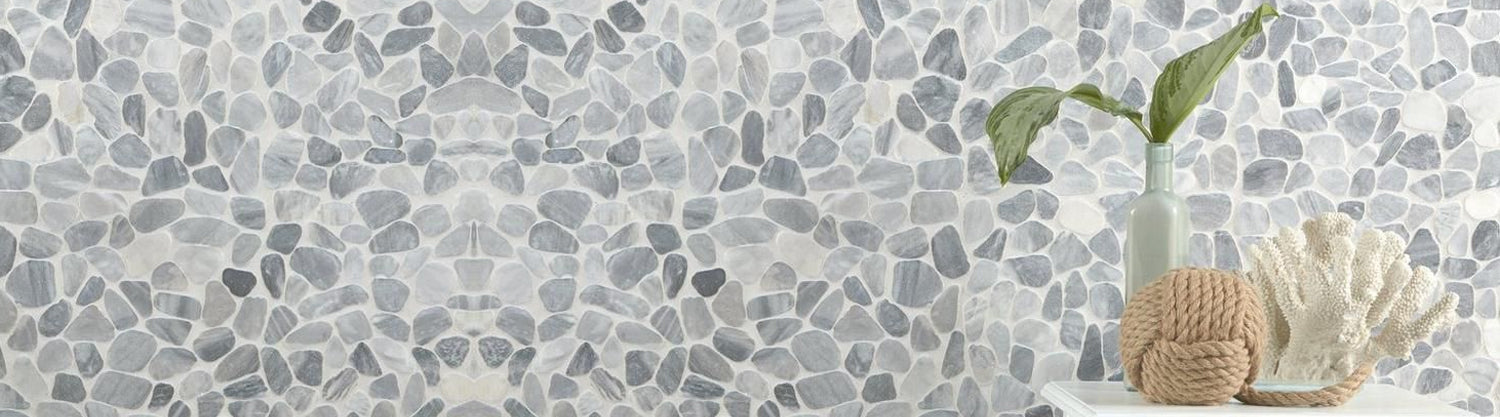
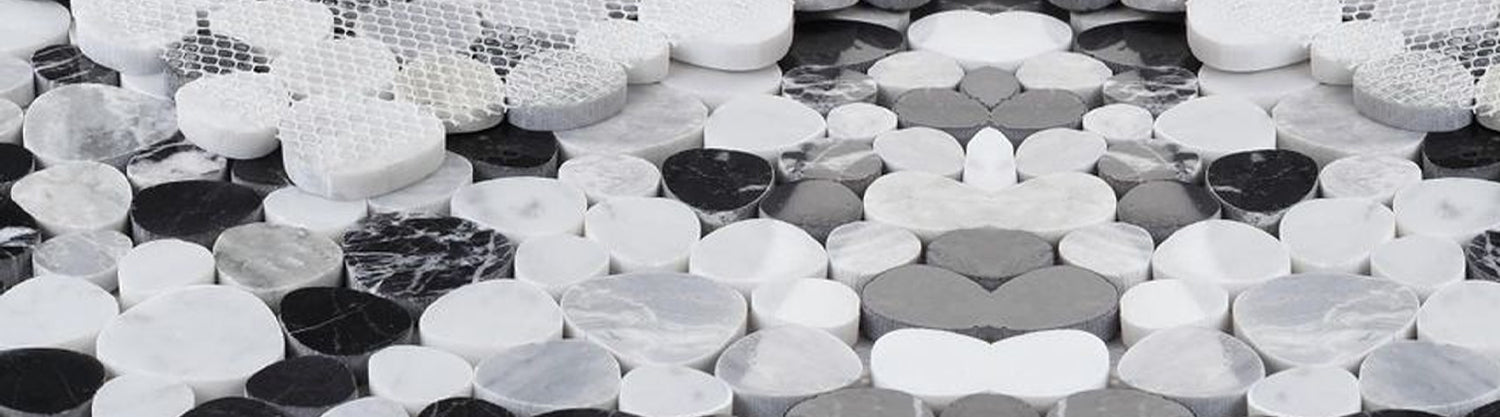
Bianco Dolomite is a crisp white marble with soft gray veining, and it has long been a favorite for bathrooms and shower walls. Cut into flat-topped, rounded pebbles and mounted on mesh sheets, it keeps that bright, clean color while adding real texture underfoot. It reflects light, so a small bathroom feels bigger. It also reads as natural stone rather than a flat white wall of tile, which is why it suits both modern and traditional rooms.
This guide covers the four Bianco Dolomite options, how they compare, which one fits each room, and how to keep white stone looking white.
Meet the Four
Same stone, different scale. Tap any card for full details and sizing.

Small Round Sliced Pebble Tile
Finest scale and the most grout lines. Best for grip on shower floors.

Sliced Round Medium Pebble Tile
The balanced all-rounder. Good grip and a calm look across a whole bathroom floor.

Biggest stones and the boldest look. Best for walls and feature areas.

A shape-led mosaic for accent panels and niches. Check the product page for sheet details.
Scorecard: Small vs Medium vs XL Jumbo
General guidance for comparing the three pebble sizes against each other. These are relative ratings, not lab test results.
Small
Grip underfoot
Easy to keep clean
Statement factor
Verdict: the safest pick for a wet floor.
Medium
Grip underfoot
Easy to keep clean
Statement factor
Verdict: the best balance for most bathrooms.
XL Jumbo
Grip underfoot
Easy to keep clean
Statement factor
Verdict: the boldest look, best on walls.
The logic behind the ratings is simple. Smaller stones mean more grout lines per square foot, and grout lines create traction. They also mean more grout to clean. Bigger stones flip that trade-off: a bolder look and easier cleaning, with fewer grout lines underfoot.
Three Room Recipes
Ready-made combinations so you do not have to guess.
What White Stone Does (and Does Not Do) in a Bathroom
What it does well
- Reflects light, which makes small bathrooms feel larger
- Pairs with almost any fixture finish or wood tone
- Keeps the natural texture of real stone instead of a printed look
- Stays classic, so it will not date quickly
What to plan for
- Soap film and hard water spots show more on white
- It is natural stone, so it needs sealing
- Acidic cleaners can dull the surface over time
- Light grout can discolor in a busy shower
Care: Keeping White Stone White
- Seal after installation. A penetrating sealer helps keep water and stains from soaking in. Tile Hub's Super Special Sealant and High Quality Sealant are made for natural stone and grout.
- Reseal on a schedule. Annually for shower floors is a sensible starting point. Use the water drop test: if water soaks in within about 30 seconds, it is time.
- Use a pH-neutral cleaner. Skip vinegar, lemon, and harsh acidic bathroom cleaners, which can dull natural stone.
- Squeegee and ventilate. Removing standing water and running the fan prevents most spotting and mildew.
- Wipe spills quickly. Shampoo, hair dye, and cosmetics can stain light stone if left to sit.
Installation Basics
Pebble tile installs on mesh-backed sheets, much like standard mosaic. Set it in thinset that can absorb small thickness differences between stones, and blend stones across sheet edges by hand so the seams disappear. On a shower floor, the slope and waterproofing underneath matter more than the stone itself, so have a qualified installer confirm the pan before tile goes down. Grout all joints fully, then seal once the grout has cured.
Not Quite the Right White?
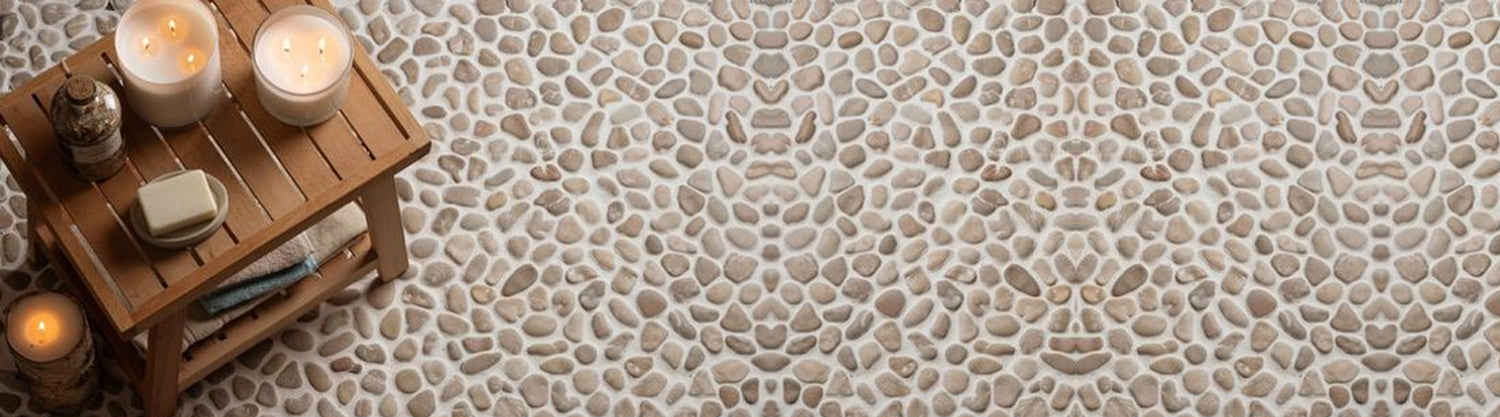
If you want a slightly warmer or cooler white, these sliced pebble options sit nearby.


Frequently Asked Questions
Is Bianco Dolomite pebble tile good for a shower floor?
Yes. Flat-topped sliced pebble gives real traction, especially in the small size, which has the most grout lines. Choose a matte or honed surface for wet floors and have the slope and waterproofing done correctly before installation.
Which size should I choose for a bathroom floor?
Medium is the best fit for most full bathroom floors because it balances grip and a calm look. Choose small for a shower pan or a tight space, and XL jumbo for walls or feature areas.
Will white pebble tile stain?
Natural stone can stain if left unsealed. A penetrating sealer, quick spill cleanup, and a pH-neutral cleaner keep white stone looking clean. Soap film and hard water spots are more visible on white, so squeegee after showers.
What grout color works best with white pebble tile?
A light warm gray is the most forgiving choice because it hides soap film and minor staining. Bright white grout looks seamless but shows grime faster. For a shower floor, stain-resistant or epoxy grout is worth considering.
How often should I seal it?
Seal after installation, then plan on resealing a shower floor about once a year. Use the water drop test: if water soaks in rather than beading, reseal.
Can I mix sizes in the same room?
Yes. A common approach is medium or small pebble on the floor and XL jumbo or the Moon Mosaic on one feature wall. Since all four options share the same stone, the color stays consistent.
Order a Sample First
White looks different in every bathroom. Order a sheet, set it on your floor, and check it in morning and evening light before you commit.
Shop White Pebble Tile at Tile Hub →