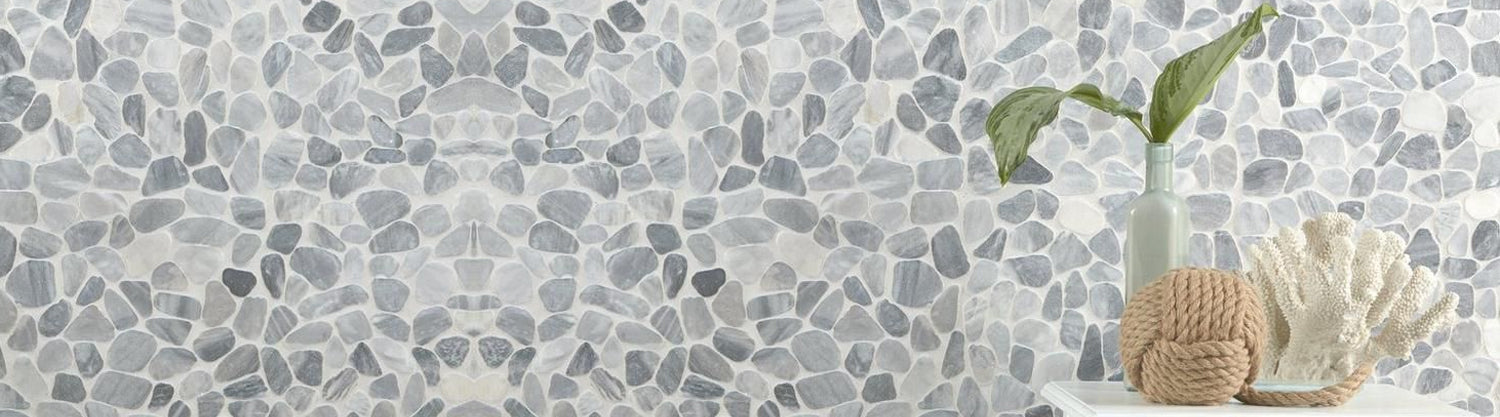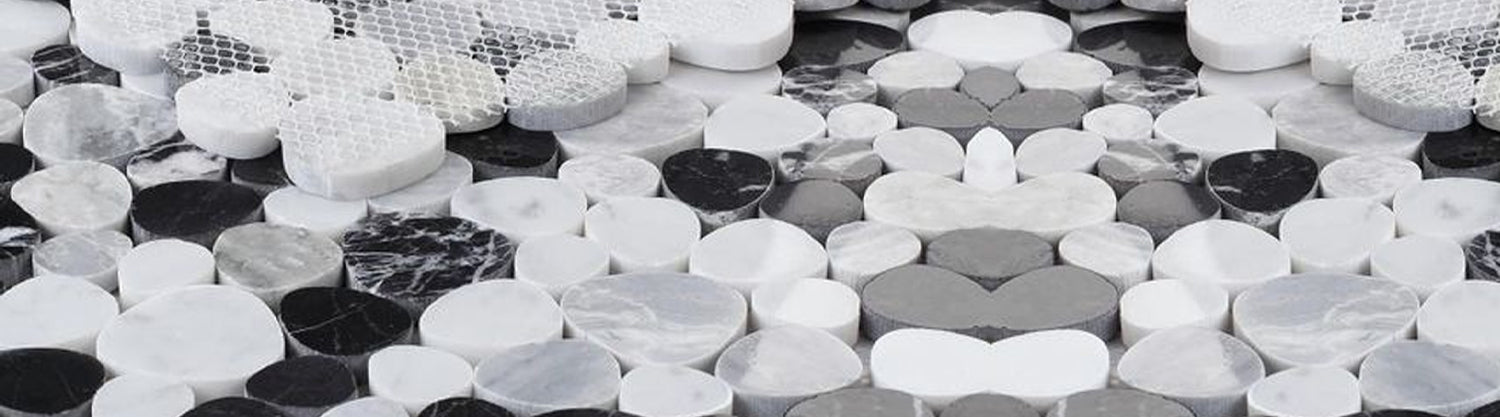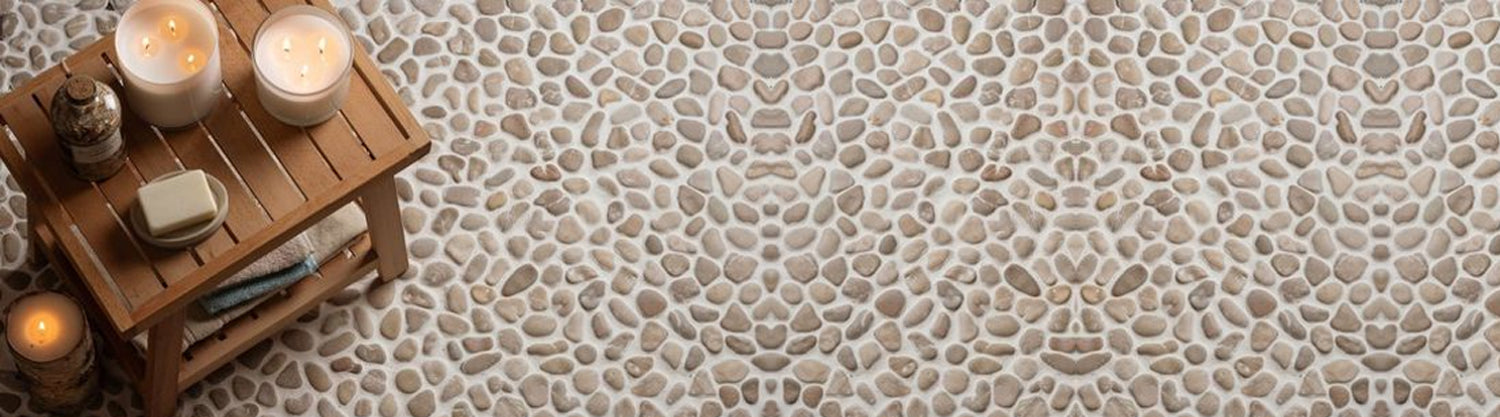
Quick Answer: A tiled kitchen island can be bold or minimalist, and both work when the choice matches your kitchen's existing finishes. Bold patterns, like geometric tile or encaustic designs, work best against neutral cabinetry, where the island can safely become the focal point. Minimalist choices, like subway tile or large-format neutrals, work best when your cabinets, countertops, or floor already carry color or texture. Read on for the full comparison, how to tile the base and sides, and the practical details that make an island installation last.
In This Guide
- Why Kitchen Island Tile Matters
- Bold vs Minimalist: The Two Core Styles
- How to Choose Between Them
- Bold Tile Ideas and Inspiration
- Minimalist Tile Ideas and Inspiration
- Black Tile on a Kitchen Island
- Tiling the Base vs the Sides vs the Top
- How to Tile a Kitchen Island Base
- Practical Tips Before You Buy
- FAQs
The kitchen island has evolved into much more than an extra prep surface. In today's homes, it is where meals are prepped, conversations happen, and design statements are made. Because it sits at the heart of the kitchen, every design decision around the island carries extra weight, especially tile selection.
If you are exploring kitchen island tile ideas, you will quickly notice two dominant styles shaping modern kitchens: bold tile patterns that demand attention, and minimalist tile designs that bring calm and balance. Both approaches can look stunning when done right, but the key lies in choosing the style that fits your kitchen, your lifestyle, and how you want the space to feel every day. This guide walks through the differences, shows where each works best, and covers the installation details that most guides skip, like how to actually tile the base, sides, and top of an island.
Why Kitchen Island Tile Matters
Kitchen island tiles often cover a large visual surface, whether on the sides, the base, or as a full wraparound feature. Because of this, they naturally draw the eye the moment someone enters the kitchen. A well-chosen tile can elevate the entire space, while a poor choice can feel distracting or dated fast.
From a design standpoint, island tiles help define the overall mood of the kitchen. They can add contrast, texture, and depth, or they can quietly support a clean, cohesive look. The right pattern can make a large kitchen feel more grounded, or help a compact kitchen feel lighter and more open.
Functionality matters just as much. Kitchen islands take daily wear, from foot traffic and spills to bumps and scrapes against cabinetry. That is why so many homeowners look for kitchen island tile ideas that balance visual appeal with durability and easy maintenance, not just good looks in a photo.
Bold vs Minimalist: The Two Core Styles
Bold Tile Patterns
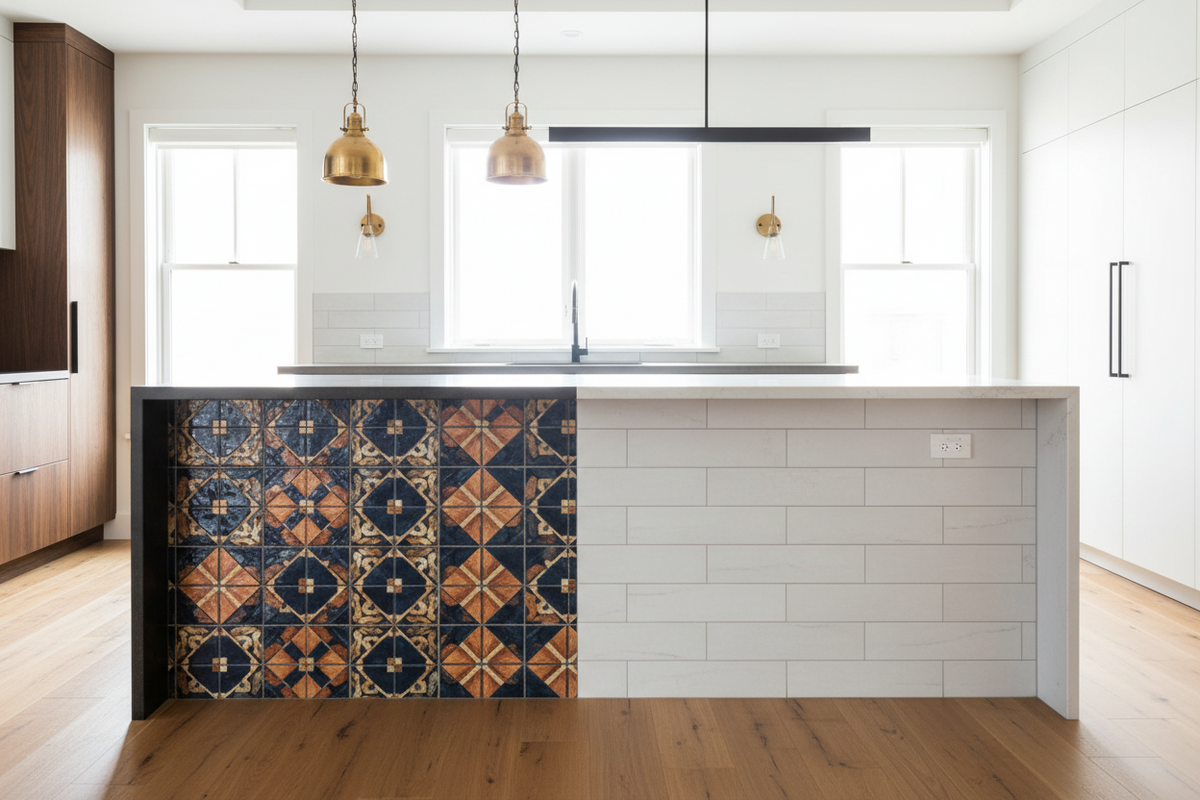
Bold tile is all about visual impact. It is designed to stand out and make the island the focal point of the room. Popular options include geometric designs, patterned encaustic tile, colorful mosaics, and high-contrast layouts like black and white. These work especially well in kitchens with neutral cabinetry and countertops, where the island can safely take center stage. Bold tile suits homeowners who want their kitchen to feel expressive and full of character.
Minimalist Tile Patterns
Minimalist tile takes a more subtle approach, creating a calm foundation that lets the rest of the kitchen shine. Clean lines, soft colors, and understated texture define this style. Common choices include subway tile, stacked layouts, large-format tile, and neutral tones like white, beige, or light grey. These feel timeless and pair easily with a wide range of cabinet finishes and hardware.
How to Choose Between Bold and Minimalist for Your Space
There is no one-size-fits-all answer here. The best decision depends on how your kitchen functions and how you want it to feel.
- Start with your overall kitchen style. Sleek, modern kitchens often benefit from minimalist tile that reinforces clean lines. Transitional or eclectic kitchens can comfortably support bold patterns without feeling overwhelming.
- Evaluate your existing finishes. If your cabinets, countertops, and flooring already carry strong colors or textures, minimalist tile helps balance the space. If everything feels neutral, bold tile adds much-needed personality.
- Consider size and lighting. Large, open kitchens with plenty of natural light can handle bold patterns more easily. In smaller kitchens, minimalist tile often helps maintain a sense of openness.
- Think about daily use. Bold patterns can disguise minor stains and wear. Minimalist tile often makes cleaning quicker and simpler.
When comparing different kitchen island tile ideas, picture how the space will feel during everyday routines, not just how it looks in design photos.
Bold Tile Ideas and Inspiration
Bold tile allows your kitchen island to become a design statement that sets the tone for the entire room.
Color-Driven Statement Tiles
Tiles in deep blues, forest greens, warm terracotta, or multi-tone patterns instantly add character. These work best when balanced with simple cabinetry and subtle hardware, so the island stays the star without overwhelming the kitchen.
Graphic Geometric Patterns
Sharp lines and repeating shapes create a modern, architectural look. Geometric tile is especially effective in open-concept kitchens, where the island needs to visually anchor the space.
Mixed Textures and Finishes
Combining matte and glossy tile, or subtle color variations, adds depth and dimension. This approach feels layered and intentional, offering visual interest without excessive color.
Minimalist Tile Ideas and Inspiration
Minimalist tile focuses on quiet elegance, creating kitchens that feel organized, timeless, and easy to live with.
Classic Subway and Stacked Tile
Subway tile arranged in horizontal or vertical stacks remains popular for good reason. It is versatile, visually clean, and works with nearly any design style.
Soft Neutrals with Subtle Texture
Neutral tile with gentle texture, such as stone-look or lightly veined finishes, adds warmth without visual clutter. These ideas help the space feel inviting rather than stark.
Large-Format Tile for a Seamless Look
Larger tile reduces grout lines, creating a smoother, more continuous appearance. This enhances the feeling of space and simplifies ongoing maintenance.
Black Tile on a Kitchen Island
Black tile deserves its own mention because it works both ways, bold and restrained, depending on how you use it. A full black tiled base with a matte finish reads as quietly dramatic and modern, especially against light cabinetry, white countertops, or warm wood floors. Add a pattern, like black hexagon or fluted tile, and the same color becomes a genuine bold statement instead.
- Matte black subway or large-format tile on the base gives a grounded, modern anchor without feeling heavy, especially in kitchens with light walls and plenty of natural light.
- Glossy black tile reflects more light and suits smaller kitchens where you want the island to feel less bulky.
- Black tile with white or light grout adds contrast and definition, useful when you want the tile pattern itself to read clearly rather than blend into one dark mass.
- Black tile with black grout creates the most seamless, monolithic look, popular in modern and minimalist kitchens that still want a dark accent.
Because black shows fingerprints, smudges, and water spots more readily than lighter tile, a textured or honed finish (rather than high gloss) tends to hide daily wear better on a surface people lean on and bump into constantly.
Tiling the Base vs the Sides vs the Top
"Kitchen island tile" actually covers three different surfaces, and each one has different practical demands.
| Surface | Best Tile Choice | Key Consideration |
|---|---|---|
| Base (full wraparound) | Large-format porcelain or bold pattern tile | Covers the most visual area, sets the tone for the whole kitchen |
| Sides only | Subway tile, mosaic, or a contained pattern | A lower-commitment way to add pattern without covering the entire base |
| Top (as a surface) | Dense, sealed porcelain or ceramic rated for countertop use | Needs to handle heat, knife marks, and spills, not every decorative tile is countertop-rated |
Most homeowners tile the base and sides for visual impact and keep the top in stone, butcher block, or quartz for daily food prep. If you do want a tiled top, confirm with your supplier that the specific tile is rated for countertop use and sealed accordingly, since not every decorative floor or wall tile is built for that kind of contact.
How to Tile a Kitchen Island Base
Tiling an island base is a genuinely achievable project for a confident DIYer, though most homeowners bring in a professional for the cuts around corners and outlets. Here is the general process.
- Confirm the base is a suitable substrate. Tile needs a stable, flat surface. Existing painted cabinetry or laminate usually needs a cement backer board added first.
- Measure and plan your layout. Dry-lay a row of tile against the base to plan where cuts will fall, especially at corners. Centering a pattern rather than starting from one edge usually looks more intentional.
- Choose your tile format. Large-format tile minimizes grout lines and cuts down on visible seams at corners. Smaller mosaic or subway tile is more forgiving of an uneven substrate and easier to cut around obstacles.
- Set the tile with the right adhesive. A modified thin-set is typical for most porcelain and ceramic; check your tile manufacturer's recommendation, since natural stone sometimes needs a different setting material.
- Grout and seal. Choose a grout color that either blends with the tile for a seamless look or contrasts for definition, then seal both grout and any porous tile once fully cured.
Because a kitchen island base takes regular bumps from stools, cabinet doors, and foot traffic, durability matters as much as the look. Dense porcelain in a matte or textured finish tends to hide daily wear better than a high-gloss finish, similar to the guidance for fireplace surrounds and other high-touch tiled surfaces.
Practical Tips Before You Buy and Install
Even the best tile design can fall short without proper planning. A few details before installation make a real difference to long-term satisfaction.
- Order samples and view them in your kitchen's natural and artificial lighting before committing
- Test grout colors, since they can dramatically change the final look of the same tile
- Choose finishes based on use, matte hides smudges better, glossy reflects more light
- Factor in installation costs and sealing requirements when setting your budget
Frequently Asked Questions
Should I tile the whole kitchen island base or just the sides?
Both work. A full wraparound base gives the biggest visual impact and works well as a bold statement. Tiling just the sides is a lower-commitment option that still adds texture and pattern without covering the entire island, and it can be a good middle ground if you are unsure about a bold choice.
Can I tile the top of my kitchen island as a countertop?
Yes, but confirm the specific tile is rated for countertop use. It needs to handle heat, knife contact, and spills, which not every decorative floor or wall tile is built for. Dense, sealed porcelain or ceramic is the safer choice for a tiled island top.
Is black tile a good choice for a kitchen island?
Yes, and it works for both styles. A matte black tile in a simple layout reads as understated and modern, while a patterned black tile, like hexagon or fluted, becomes a bold statement. A textured or matte finish tends to hide fingerprints and water spots better than high gloss.
What tile pattern works best for a small kitchen island?
Minimalist patterns in neutral tones generally work best in smaller kitchens, since they help maintain a sense of openness. Large-format tile with minimal grout lines can also make a small island feel less busy than a highly patterned tile would.
Do I need to seal the tile on my kitchen island?
Yes, particularly for the grout and any porous or natural stone tile. Sealing after installation protects against staining and moisture, and resealing on a regular schedule keeps the surface performing well against daily kitchen use.
Choosing between bold and minimalist tile is less about trends and more about understanding your space. Bold tile adds personality and visual drama, while minimalist tile offers calm, balance, and timeless appeal. As you explore your own kitchen island tile ideas, focus on what feels right today and in the years ahead, from the pattern down to whether you tile the base, the sides, or both.